
The History of Boudoir Photography
Boudoir photography didn’t start with ring lights and Instagram filters. It started with explosive flash powder and enormous wooden cameras. When you look at a soft-focus boudoir image from the 1920s, you might assume the photographer wanted that dreamy, diffused look. They usually didn’t. They just didn’t have fast film. If you tried to shoot intimate portraiture in 1910, you were dealing with emulsions so slow that your subject had to recline on a chaise lounge simply because sitting upright for the required exposure time was physically impossible. The history of this entire genre is tied directly to the physical constraints of the gear. The aesthetic evolved because the technology forced it to evolve.
The word boudoir originally meant a woman’s private dressing room or sitting room. Early photographers hauled 8×10 view cameras into these spaces. You had to set up the heavy wooden tripod, get under the dark cloth, and focus the image on a piece of ground glass. The image was upside down. You had to compose the frame upside down, calculating your depth of field by moving the front standard of the lens forward or backward. Then you loaded a film holder, pulled the dark slide, and told your subject to hold perfectly still. If she breathed too heavily, the image blurred. That rigid physical requirement is why early intimate photography looks the way it does. The subject is often leaning back, supported by heavy furniture, relaxed out of necessity rather than pure creative choice.
Lighting in those early days was a massive logistical problem. Available darkness was the default. Photographers used magnesium flash powder. You literally set off a small explosive indoors. The powder ignited, creating a blinding flash of light and a thick cloud of acrid smoke. You held the shutter open, ignited the powder, and hoped the exposure was close enough to usable. The light was harsh, unflattering, and completely flat if fired from the camera position. To get any dimension on the subject, you had to position the flash off to the side, which meant running a physical ignition wire or having an assistant trigger the powder while you fired the shutter. The skin tones in these early images often look flat and washed out because the light source was a literal flash bang going off in the corner of a bedroom. The room filled with smoke. You had to wait for it to clear before you could even see your subject again.
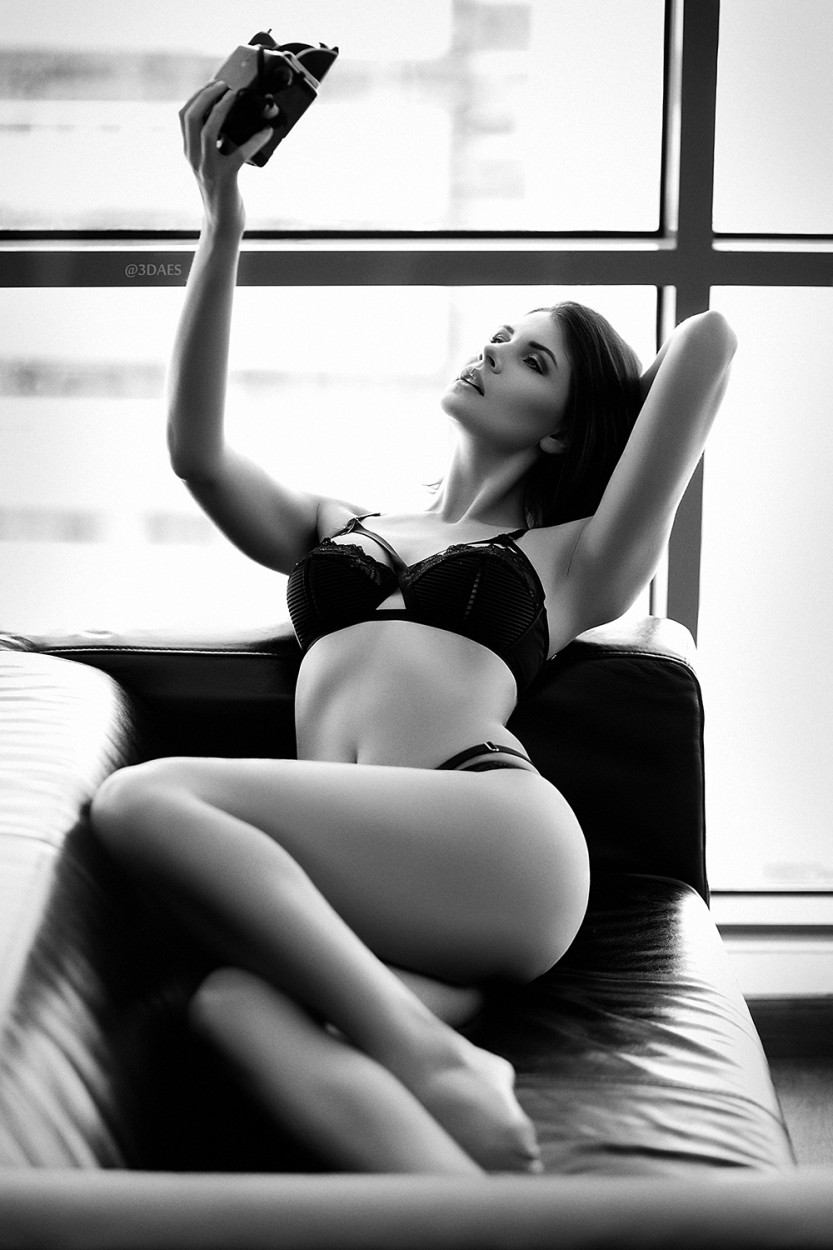
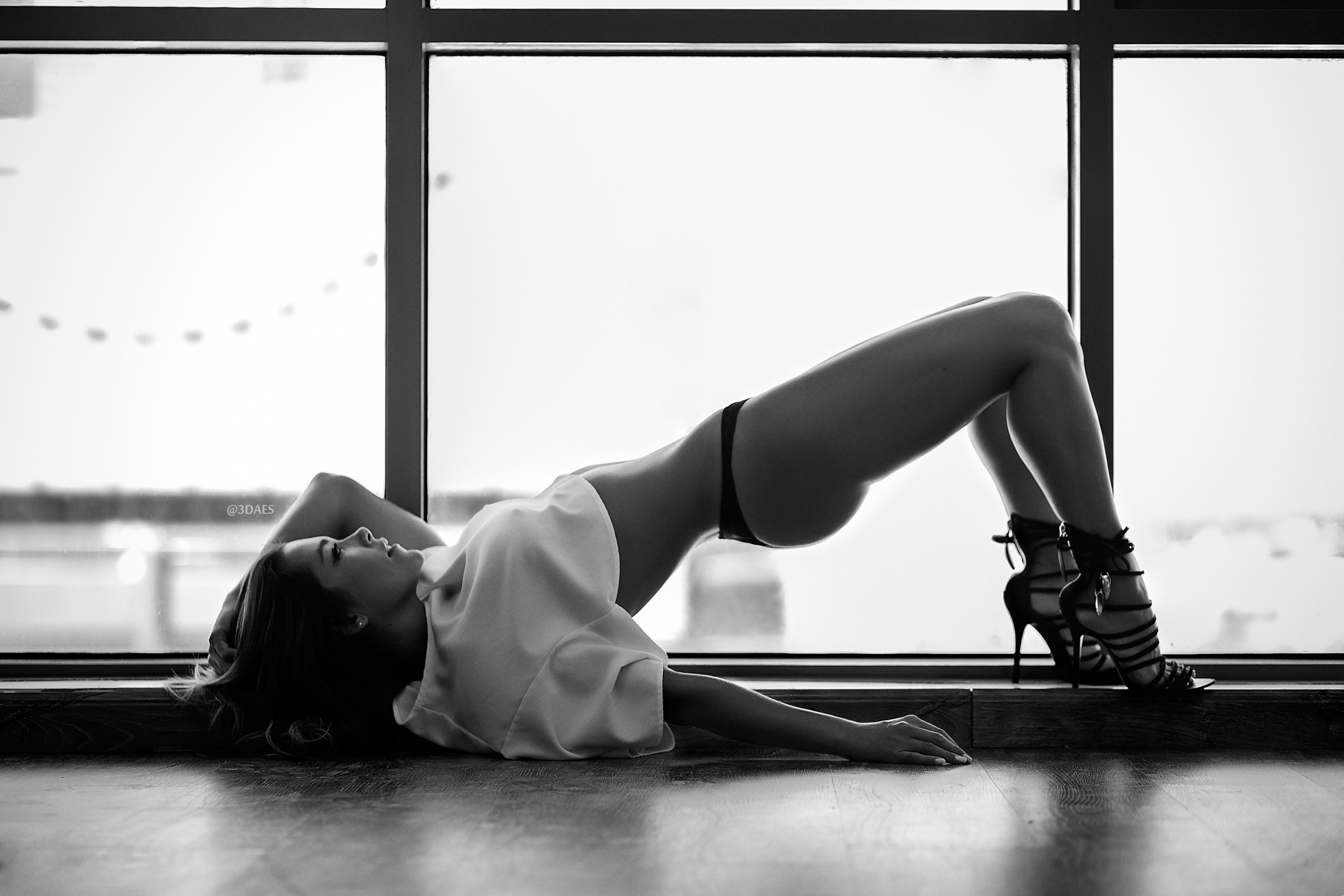
As film speeds increased in the 1930s and 1940s, the look of boudoir shifted dramatically. You could finally capture natural light without risking a fire. Photographers began positioning subjects near windows, using heavy curtains to control the spill. This is where the classic window light portrait really took hold. The glass became a massive diffuser. The light wrapping around the subject’s body was no longer a product of a chemical explosion, but the actual sun filtered through dirty urban glass. The textures changed. You started to see the actual weave of silk and lace, rather than just the shape of the garment under a blast of flat light. You could shoot at wider apertures, getting a little bit of the room into focus, creating depth.
“Josh is super professional and takes his time to make sure the photos are beautiful. He has an artistic eye for light and details.”
– Futoun K Boudoir Photo Shoot Testimonial
The 1950s brought the pin-up aesthetic into the boudoir space. This era introduced 35mm film formats to the mainstream. Cameras like the Leica allowed photographers to shoot handheld. You no longer needed a heavy tripod. The physical dynamic between the photographer and the subject completely changed. The photographer could move around the room, shooting from high angles or lying on the floor. The flashbulbs of this era, the AG-1 or the M3, replaced the dangerous flash powder. You still only got one shot per bulb, and they burned hot to the touch, but they were safer and more predictable than loose powder. The light remained hard, but the poses became more active because the subject didn’t have to hold them for as long.
Bunny Yeager is a critical name in this specific shift. She was a model who picked up a camera and started shooting other women, most notably Bettie Page. Yeager understood the mechanics of posing from the inside out. She knew which angles created tension in the torso, where the light needed to hit to carve out the waist, and how to direct a subject to pop a hip without making it look painful. Her boudoir work was shot in actual bedrooms and motels, using a simple handheld light meter and a 35mm camera. The images are sharp, high-contrast, and distinctly less formal than the large format work that came before them. She made the private room look like a space where things actually happened, rather than a stiff theatrical set.
“I loved how you gave direction. Really helped in capturing the angles just right.”
– Jes B Boudoir Photo Shoot Testimonial
The 1970s introduced a massive shift in the power dynamic of boudoir photography with the arrival of the Polaroid. The SX-70 instant camera changed everything. You suddenly had a camera that produced a finished print in sixty seconds without a darkroom. This allowed for absolute privacy. A subject could shoot herself, or a couple could shoot each other, without ever handing a roll of film to a lab technician. The Polaroid film had a specific, soft color palette. The chemistry was unstable, and the images faded over time, but the immediacy was unmatched. Boudoir became something you could do on a Tuesday night in your own bedroom with zero logistical overhead. The camera itself was a plastic box with a mirror system, not professional gear, but it democratized the genre entirely.
Professional boudoir in the 1980s and 1990s leaned heavily into the glamour shot aesthetic. This meant medium format transparency film, usually Kodachrome or Ektachrome, shot on cameras like the Hasselblad 500C. When you shot a Hasselblad, you looked down into a waist-level finder. The image was reversed left to right. You had to mentally flip the composition in your head. You cranked the film advance with a loud, mechanical clack. You only had twelve frames per roll. Every single click of the shutter cost you roughly four dollars in film and processing. You did not shoot twenty frames of the same pose. You metered the light with a handheld incident meter, placing the lumisphere over the subject’s cheek and reading the light falling on her face. You set the aperture and shutter speed manually. You focused the lens by looking for a microprism ring in the center of the ground glass. When the pattern dissolved into a single clear image, you were in focus. It required total concentration. The subject could hear the mechanical process. The loud clack of the mirror flipping up and the subsequent slap of the shutter created a rhythm in the room. It was a physical event. The resulting images had a heavy, glossy texture. Skin looked like plastic because the retouching process essentially painted over the pores using dyes and an airbrush.
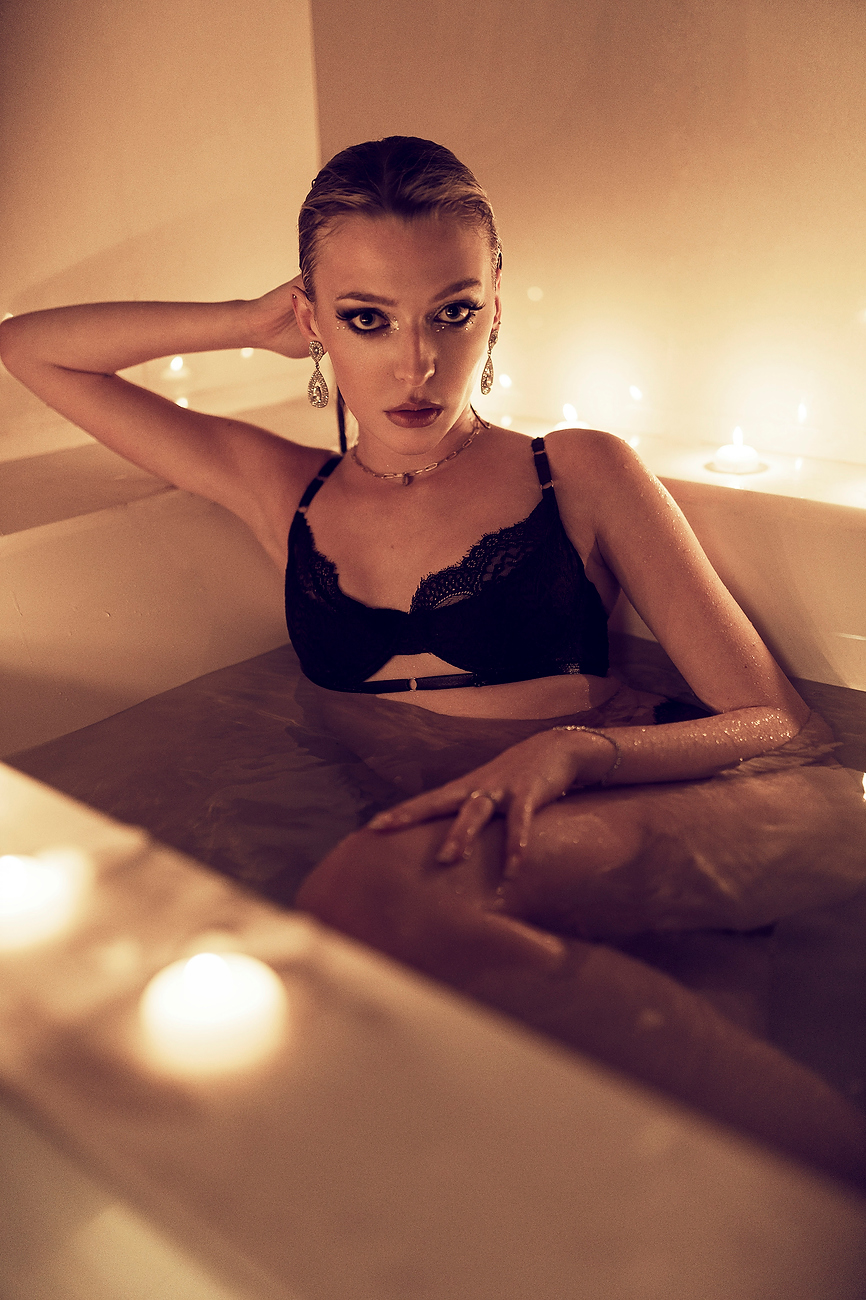
The digital pivot in the early 2000s disrupted the entire structure. Early digital SLRs had terrible low-light performance. Shooting boudoir on a Canon 10D meant staying below ISO 400, or the image would fall apart into chroma noise. But the immediate feedback loop changed the psychology of the shoot. You could show the subject the back of the camera. You could correct a pose, adjust a strap, or move a light in real time. The guesswork was gone. Then digital sensors improved rapidly, and photographers realized they could shoot in incredibly dim rooms. The aesthetic of the dark and moody boudoir shoot became popular not because it was a sudden new artistic vision, but because digital sensors finally allowed you to shoot in a room lit only by a single lamp or a television screen without destroying the file. The cost per frame dropped to zero. Photographers started overshooting. A two-hour session that used to yield one hundred and forty frames on medium format film suddenly produced a thousand digital files. The culling process became a grueling slog in front of a calibrated monitor.
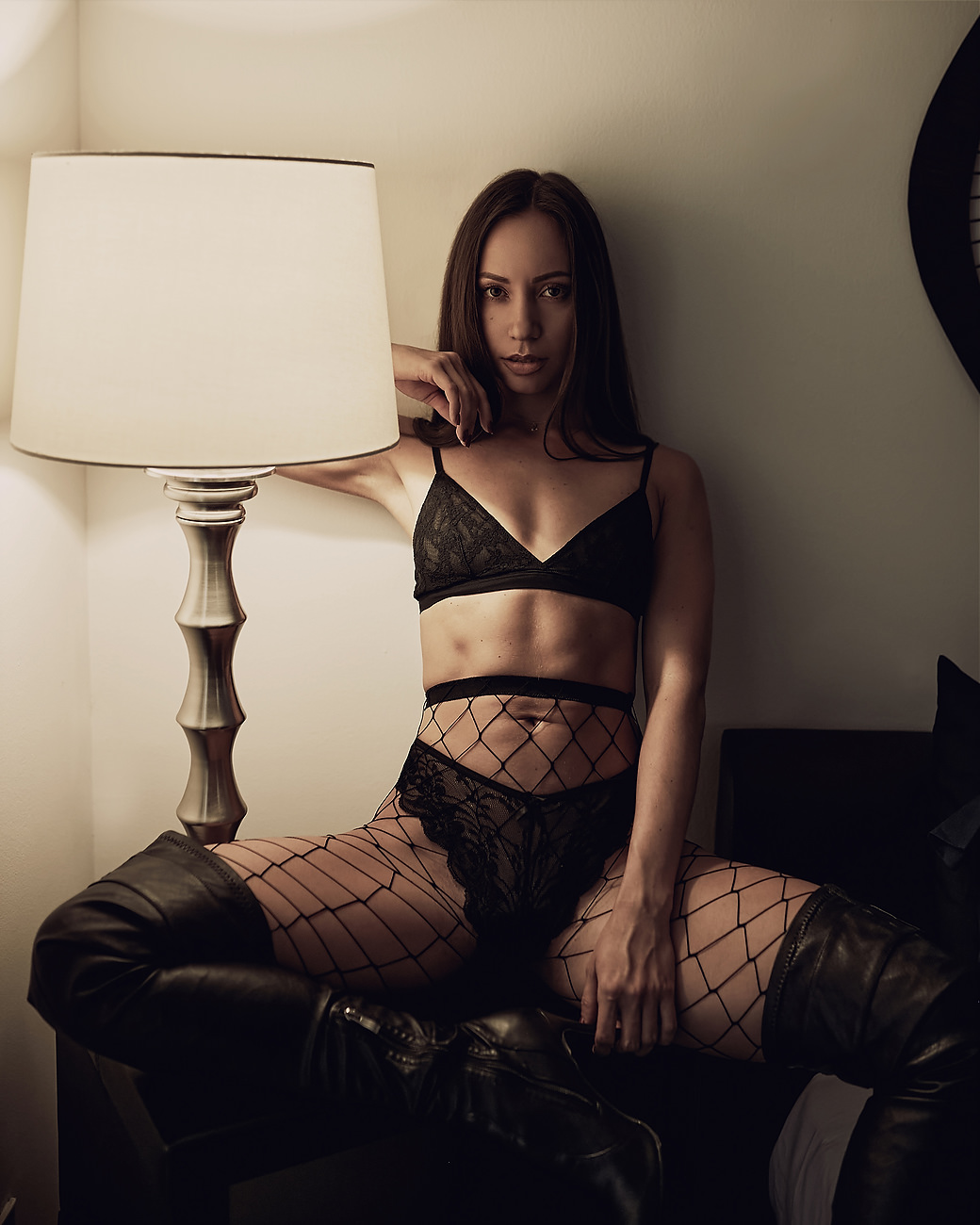
Today, the technical landscape is dominated by full-frame sensors and fast prime lenses. An 85mm f/1.4 lens is standard. The focal length compresses the body in a way that is generally flattering, pulling the subject forward from the background while keeping facial features proportional. Shooting wide open at f/1.4 gives a razor-thin slice of focus. The subject’s eyes are sharp, and the edges of the frame dissolve into soft bokeh. This technical choice requires serious precision. If the subject shifts two inches forward, the eyes go soft. You have to manage the focus constantly. The lighting has also homogenized. The ring light became ubiquitous. It provides even, shadowless illumination that wraps around the subject. It is efficient and easy to use, but it removes the dimensional depth that a key light and a fill light provide. The modern ring light boudoir image is perfectly exposed, highly detailed, and completely flat. It removes the shadows that define the muscles and the curves.
You see this heavily in the current social media aesthetic where the skin is smoothed to an unnatural degree in post-production. Frequency separation in Photoshop allows you to remove blemishes and smooth skin texture while keeping the pores intact, but the line between polished and plastic is incredibly fine. Many shooters push the smoothing slider too far, eliminating the texture of the skin entirely. They remove the subtle shadows under the collarbones, the faint lines around the eyes, the very things that make a face look three-dimensional on a screen. The result is an image that looks like a render rather than a photograph.
“Many photographers take an okay picture and then completely over edit and manipulate, creating a totally fake picture, but Josh strives for perfection from start to finish.”
– Nika B Boudoir Photo Shoot Testimonial
There is a pushback against this highly processed look. Many working photographers are returning to the mechanical constraints of the past. They are picking up medium format film cameras again. They are shooting Portra 800 or Cinestill 800T for the grain structure and the latitude in the highlights. Film handles overexposure beautifully, which means you can shoot directly into a window, blow out the highlights, and still retain detail in the shadows on the subject’s face. Digital sensors clip highlights abruptly. Once the data is gone, it is gone. Film degrades gracefully, and that degradation is exactly the texture people are paying for now. They want the grain, the slight color shifts, the imperfections that prove the image was physically recorded on a chemical emulsion.
Logistically, a modern boudoir session is still a balancing act. You walk into a hotel room or a client’s house and you have to assess the light immediately. Which way do the windows face? Are there sheer curtains, or will you need to diffuse the light with a sheet? You have to clear the clutter. The bedside tables covered in water bottles and phone chargers will ruin the illusion of an intimate, styled space. You strip the room down to its core elements. You turn off the overhead fluorescent lights because they cast green shadows and fight your main light source. You build the environment. The temperature matters. If you are shooting in February and the heat is cranked, the windows will fog up the second you step outside to shoot from the porch. If you are shooting in a poorly insulated loft in July, your subject will be sweating within ten minutes of taking off her robe. The physical discomfort translates directly to the face. You have to manage the room.

“He’s not only an exquisite photographer, but a great person at the same time, always professional and able to make me feel comfortable at every single shot.”
– Ila F Boudoir Photo Shoot Testimonial
The history of boudoir is really a history of problem solving. You take the tools available, whether that is explosive flash powder, an instant camera, or a high-megapixel digital sensor, and you figure out how to make a human body look comfortable and intentional in a private space. The poses haven’t changed much. Reclining, leaning, stretching. The angles haven’t changed much. Slight turns to define the jaw, shifting weight to the back leg. What changes is the mechanical process of capturing the light. The gear dictates the aesthetic. Once you understand that, the progression from the stiff, soft portraits of the 1910s to the hyper-sharp, artificially lit images of today makes complete sense. It is not a sudden evolution in artistic thought. It is just the result of new equipment.
Related: Post Shoots
 Beautiful Classic Boudoir Styles That Inspire – Feel Amazing
 Ultimate Guide to prepare for your Boudoir Photoshoot
 5 Benefits of Boudoir Photography
 6 reasons to Gift yourself a Boudoir Photoshoot
 Boudoir Photography That Tells Your Story
 10 Misconceptions About Boudoir Photography You Should Forget
 How to Prepare for Your Boudoir Shoot Like a Boss?
 Reasons for Women to Do a Boudoir Session